Build a camera from a dark room
Before a photograph could be saved, an image could still be projected. A camera obscura uses a small opening to let light from an outdoor scene enter a dark space. Rays from different parts of the scene cross at the open
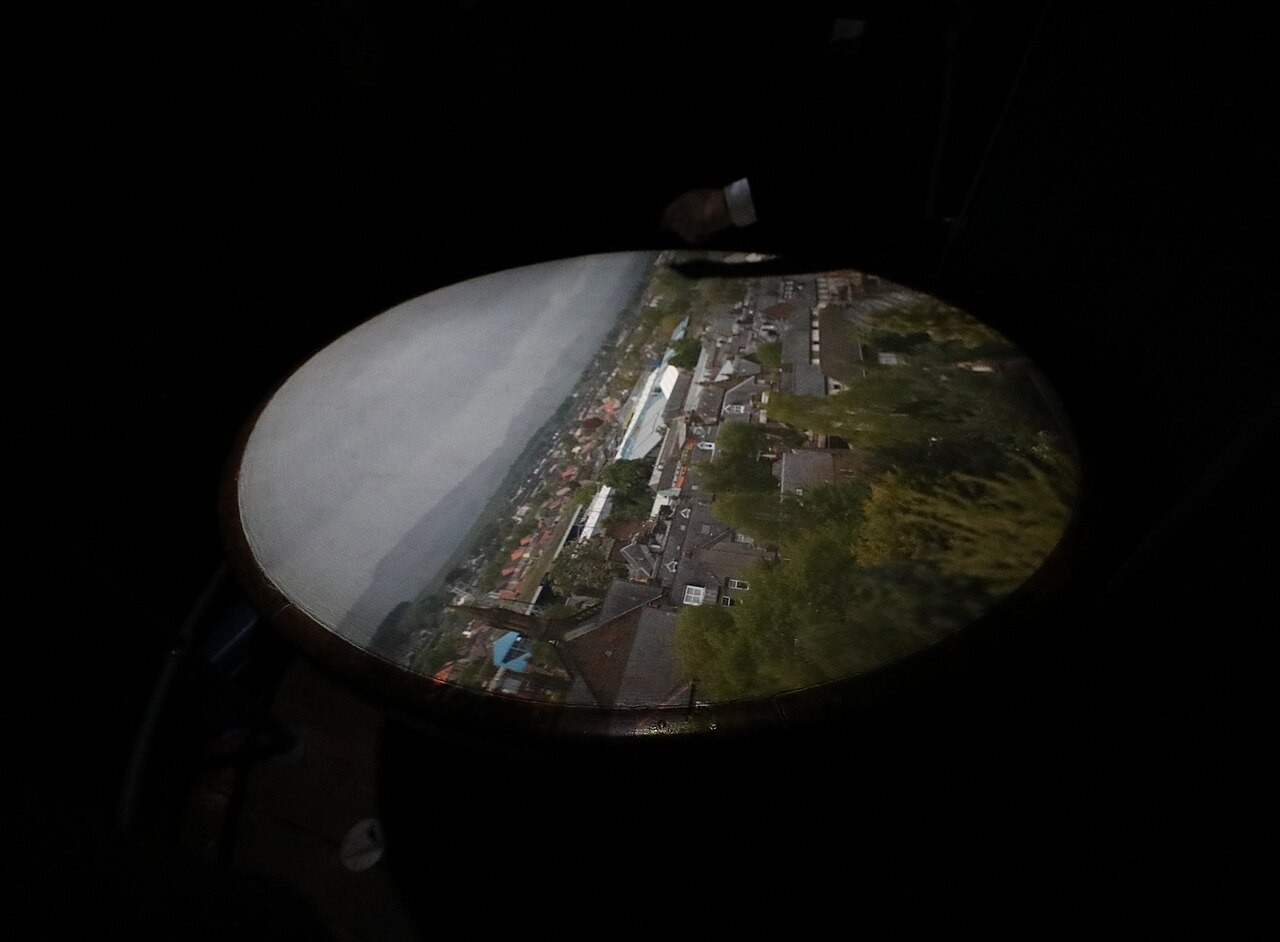

Before a photograph could be saved, an image could still be projected. A camera obscura uses a small opening to let light from an outdoor scene enter a dark space. Rays from different parts of the scene cross at the opening and form an inverted image on the opposite surface. The result feels like a room remembering how to see.
The experiment
Choose a room with a window facing a bright, varied outdoor scene. Work only where you have permission and can maintain safe ventilation and exits. Cover the window with opaque material, leaving a small circular opening. Darken the room, wait for your eyes to adjust and look at the wall opposite the opening.
At first the image may be dim. A larger opening admits more light but blurs detail; a smaller one improves sharpness while reducing brightness. That tradeoff is the whole lesson. Try two aperture sizes and sketch the differences rather than relying on a phone camera to judge them.
Never cover emergency exits, create trip hazards or look directly at the sun. Do not attach materials to windows or walls without permission.
A tool that teaches perspective
The Smithsonian's National Museum of American History holds a student camera obscura made of two telescoping wooden boxes, with a pinhole at one end and ground glass at the other. Its simplicity is revealing. You do not need a sensor to form an optical image. The sensor is what records it.
For an artist, the projected scene is a moving drawing reference. Trees sway, clouds drift and people pass through the inverted frame. Tracing a still view is possible, but watching the image change makes perspective feel less like a school exercise and more like an encounter with time.
Turn it into a collaborative work
One person adjusts the opening. Another sketches the projected image. A third records changes in brightness and sharpness. Rotate roles every five minutes. Then compare three drawings made from the same projection. Where did observers disagree about what mattered?
This is an original Castle Arts Collective workshop concept, not an announcement of a scheduled session. A venue could host it in a controllable room, or a group could use a portable box instead. The concept scales from a kitchen-table demonstration to a room-sized installation, but access, safety and technical details would need to be planned.
Castle Arts Collective invites artists, musicians, creators and community venues to connect at https://castlearts.villageropen.org/connect/. Proposals and booking inquiries are welcome; no date or confirmed availability is implied.
Photo context: Geni photographed a projected image at the Dumfries Museum camera obscura in 2019. It illustrates the optical effect, not a Castle Arts event.
Read the original sources
www.americanhistory.si.edu ↗Sources checked October 29, 2026. Time-sensitive details should be checked again before acting.
Artists, musicians, creators and venues: tell us what you would like to make together. Scope and scheduling are confirmed in writing.
Artists and venues: connect →